
TITLE: Master Protocol Clinical Trials for Evidence Generation
INSTRUCTOR: Don Berry; Ruixiao Lu, Cindy Lu and Jingjing Ye
MODERATOR: Bill Wang
Abstract:
A Two-Day Short Course
Drug development faces mounting pressure to deliver faster, more reliable evidence while controlling costs. Master protocols — umbrella, basket, and platform trials — have emerged as a transformative framework that enables the simultaneous evaluation of multiple therapies, biomarker-defined subpopulations, or disease subtypes within a single, integrated infrastructure. Demonstrated across oncology, COVID-19, and rare diseases, these designs improve efficiency, reduce patient exposure to ineffective treatments, and accelerate the path from evidence generation to regulatory decision-making.
This two-day short course offers a multidisciplinary immersion into the science, strategy, and practice of master protocol trials. The course is based on a newly published book: Master Protocol Clinical Trials for Evidence Generation (Chapman & Hall/CRC Biostatistics Series)
https://www.amazon.com/Protocol-Clinical-Evidence-Generation-Biostatistics/dp/103254452X.
Day 1 Morning: Strategic Foundations, Statistical Innovation and Inspiration. The opening session examines the evolving regulatory landscape across FDA and global agencies, the economic value proposition of platform trials in both single-sponsor and multi-sponsor settings, and holistic decision-making frameworks that integrate clinical, statistical, and patient-centric considerations into a unified governance approach.
The session then turns to I-SPY2 as a defining case study. Launched in breast cancer, I-SPY2 was the first trial to carry the adjective “platform” and incorporated numerous innovations for efficiently evaluating multiple investigational agents in parallel. Its Bayesian design — including response-adaptive randomization (RAR) and the “time machine” methodology — enabled more rapid decision-making about therapies while delivering better treatment to patients in the trial. Participants will explore the inspiration behind these statistical innovations, their operational implementation in I-SPY2, and their broader implications for the field of adaptive trial design.
Day 1 Afternoon: Statistical Design and Methodology, Impact to Clinical Benefit. The afternoon provides a deep dive into biomarker-based platform trial design and the resulting clinical benefit with success case studies such as I-SPY2. The session then broadens to additional statistical considerations including estimands and multiplicity, multi-regional master protocol strategies, use of external data and real-world evidence, and safety and benefit-risk assessment.
Building on these foundations, the session reviews and explores how master protocol designs — both basket and platform trials — can be extended from exploratory to confirmatory settings, examining fit-for-purpose design elements, information borrowing strategies, regulatory and HTA considerations, and common pitfalls to maximize evidence generation for regulatory decision-making.
Day 2 Morning: Implementation and Case Studies. The session addresses the operational realities of running master protocols — data monitoring committee establishment and operation, regulatory and IRB/ethics committee interactions, and software tools for trial design and simulation. It then turns to patient engagement and representation in master protocols before concluding with in-depth case studies from landmark trials: BRAF V600E basket trials, and the RECOVERY trial. These case studies illustrate how the design principles, regulatory strategies, and statistical methods from the preceding sessions play out in practice, with candid discussion of challenges and lessons learned.
Day 2 Afternoon: Panel Discussion and Q&A. The course concludes with a multidisciplinary panel bringing together perspectives from statisticians, regulators, clinical investigators, and industry practitioners. Participants are invited to pose questions, discuss emerging challenges, and explore how master protocol approaches can be applied to their own programs. This interactive session is designed to bridge the course material to participants’ real-world needs and foster cross-disciplinary dialogue on the future of master protocol trials.
Designed for clinical trialists, biostatisticians, regulatory scientists, drug developers, and industry professionals, this course bridges theory and practice to equip participants with the knowledge needed to design, evaluate, and implement master protocol trials in modern drug development.
Instructors’ Biography:
 Professor Donald A. Berry is a leading biostatistician and pioneer of Bayesian methods in medicine, widely recognized for his contributions to adaptive clinical trial design. At MD Anderson, he served as the founding Chair of the Department of Biostatistics (1999–2010) and played a central role in advancing the use of Bayesian approaches for innovative oncology trials. He founded Berry Consultants in 2000, a scientific consulting firm specializing in Bayesian and adaptive clinical trial design and implementation for pharmaceutical and medical device development. Dr Berry has designed and led numerous innovative trials, including platform trials evaluating multiple therapies simultaneously, including the landmark I‑SPY 2 adaptive platform trial in breast cancer. He has published hundreds of scientific papers and multiple books in statistics and biostatistics.
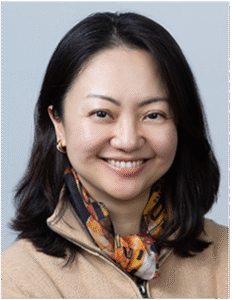 Dr. Ruixiao Lu is a recognized leader in the biotech and biopharma industry, currently as Vice President and Head of Biostatistics and Statistical Programming at Alumis Inc. She has held senior leadership roles where she led end-to-end data science and analytical teams to support product development, regulatory submissions and approvals, medical affairs, and enterprise strategic initiatives. She is dedicated to advancing statistics and data science through professional organizations, as an elected Fellow and Board Director of of the American Statistical Association (ASA) (2020-2023, 2026–2028), elected President and Board Director of BBSW (2024–2026), and co-founder of DahShu (2015–present). She is widely engaged in cross-disciplinary collaborations, with a proven record of success in promoting scientific excellence and improving public health outcomes, including her leadership role at the 2023 FDA-AACR-ASA Overall Survival Workshop.
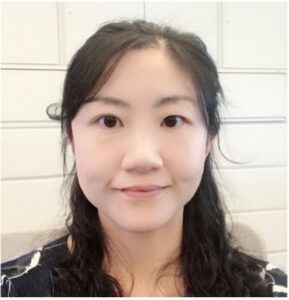 Dr. Chengxing (Cindy) Lu is a senior director of Oncology Biometrics in AstraZeneca, where she leads a team of statisticians dedicated to early-phase immunology and radioconjugate oncology development. Throughout her extensive career in drug discovery and development, her work has spanned the full spectrum of the field, encompassing early- and late-stage clinical development as well as post-marketing, medical affairs, reimbursement, and commercial strategies. Cindy is deeply committed to driving innovation and enhancing efficiency through multidisciplinary collaborations. She is actively engaged with the professional community through organizations such as the American Statistical Association (ASA), DahShu, DIA, and the International Society of Biopharmaceutical Statistics (ISBS), where she advocates for advanced statistical methodologies and promotes best practices that integrate multidisciplinary perspectives for real-world applications in drug development.
 Jingjing Ye is Head Global Executive Director, Data Science & Digital Innovations (Dsdi) at BeOne Medicines, bringing expertise in data science and innovative solutions to next-generation cancer treatments. Their background demonstrates a strong focus on statistical methodologies and regulatory compliance within the pharmaceutical and biotechnology sectors.
Within BeOne Medicines’ biotechnology environment, Jingjing focuses on developing innovative research and cutting-edge therapies. Prior to this, Jingjing served as Global Statistics & Data Science Head of Data Science Senior Director, Operational Excellence at BeiGene.
Building on this experience, Jingjing contributed to the U.S. Food & Drug Administration (FDA) as Team Leader and Lead Mathematical Statistician within the Center for Drug Evaluation and Research (CDER). In these roles, they oversaw team functions and coordinated project execution, ensuring adherence to regulatory compliance frameworks. Earlier in their career with the FDA, Jingjing served as a Mathematical Statistician, applying data analysis and generating insights within both CDER and the Center for Devices and Radiological Health (CDRH). Their work history includes analyzing data and generating insights to support the FDA’s regulatory oversight of foods, drugs, and medical devices.